
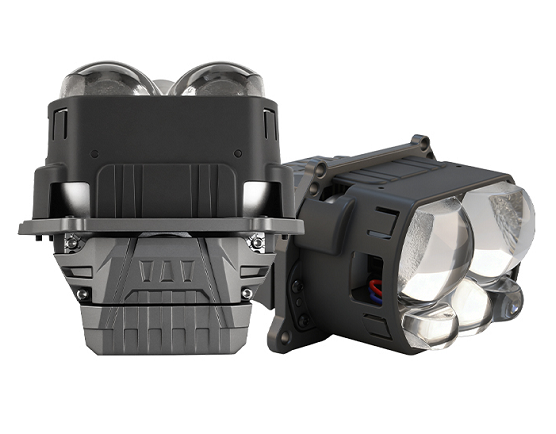
Building a private-label Bi-LED projector range starts with choosing products that suit your customers. Your brand logo and packaging matter, but so do product specifications, installation requirements and consistency between the approved sample and future orders.
For automotive lighting brands and wholesalers, a clear OEM sourcing brief helps suppliers understand the project and prepare a more accurate proposal. Use the following checklist before approving samples or packaging artwork.
1. Define the Product Range Your Customers Need
Start with your sales channels and customer requirements.
Are you supplying headlight retrofit shops, automotive accessory distributors or other lighting businesses? Are customers looking for headlight projectors, fog projectors or compact lighting modules?
Prepare a product brief covering:
The intended application.
Preferred lens size and available installation space.
Required beam functions.
Electrical requirements.
Target purchasing budget.
Expected order quantity.
If you are developing several models, give each one a clear role in the range. Explain which customer requirement each model should address instead of selecting products only because they look different.
2. Confirm the Exact Product Configuration
A model name alone may not identify every detail of a projector. Different versions can use different drivers, connectors, operating modes or accessories.
Before requesting branded samples, confirm the configuration in writing.
Check the housing dimensions, mounting points, input voltage, colour temperature and operating modes. Clarify whether power figures apply to one projector or a pair, and how those figures were measured.
Where different beam-pattern versions are offered, confirm which version is being quoted and request evidence for the exact sample. Do not rely on a general product photo to identify the required configuration.
These details should remain connected to the model code used in quotations and purchase orders.
3. Separate Branding Options from Product Development
The term “OEM” can describe different levels of customisation. Adding a logo to an existing product is different from changing its housing, optical system or electrical design.
Ask the supplier to distinguish between:
Branding on an existing product.
Custom labels and packaging.
Changes to supplied accessories.
Changes to product specifications.
New product development.
Confirm what is available for the selected model and what requires a separate technical review.
If a proposed change affects dimensions, wiring or performance, ask whether revised drawings, testing or sample approval will be required. Agree on development costs and responsibilities where applicable.
4. Prepare Clear Logo and Packaging Files
Once the branding options are confirmed, prepare the artwork in the format requested by the supplier.
Specify the approved logo, colours, placement and required product information. For packaging, check the model name, quantity, included components and any installation or handling information.
Avoid placing unverified performance figures, vehicle compatibility claims or approval marks on the box. Any certification or compliance statement should be supported by documentation applicable to the exact product and intended market.
Before printing, review the artwork at its actual size. Check that model labels are easy to read and that different versions can be identified without opening every package.
5. Approve a Reference Sample
Keep an approved sample as the reference for the order.
The approval record should identify the product model, configuration, markings, accessories and packaging. Include relevant photos, specification sheets and test records.
When comparing lighting samples, use consistent test conditions. Record the supply voltage, measurement distance and operating mode. Photographs taken with different exposure settings should not be treated as a reliable performance comparison.
If changes are requested after approval, document them clearly. Confirm whether the revised product needs another sample review before production.
6. Agree on Inspection and Issue-Reporting Requirements
Discuss inspection requirements before placing the order.
Depending on the project, these may include product identification, appearance, dimensions, operating functions, kit contents and packaging checks. Any performance acceptance criteria should include an agreed test method.
Also confirm the process for reporting product issues. Useful information may include:
The model and batch identification, where available.
A description of the issue.
Installation and wiring details.
Operating conditions.
Supporting photos or videos.
Warranty terms, review procedures and any replacement arrangements should be agreed as part of the commercial discussion.
7. Plan How Repeat Orders Will Be Identified
A clear reorder process helps protect your product range as it develops.
Use consistent model codes and keep the approved specification and artwork versions with each purchase order. Ask the supplier to confirm any proposed changes to components, configuration or packaging before they are applied to your order.
If you plan to add more models later, maintain a separate specification record for each one. This makes it easier to compare quotations, manage stock and provide accurate information to your own customers.
Discuss Your OEM Bi-LED Projector Project with ZFP
ZFP supplies Bi-LED projectors and automotive lighting retrofit products, with OEM enquiries reviewed according to the selected products and project requirements.
Explore our Bi-LED projector range as a starting point for your product selection.
To discuss a private-label project, send our team:
Your company name and target market.
The product types or models you are considering.
Required specifications and installation requirements.
Expected order quantity.
Product marking and packaging requirements.
Your preferred sample and purchasing schedule.
A clear project brief helps both sides identify suitable options, confirm the available customisation scope and prepare the next steps for sample evaluation.